
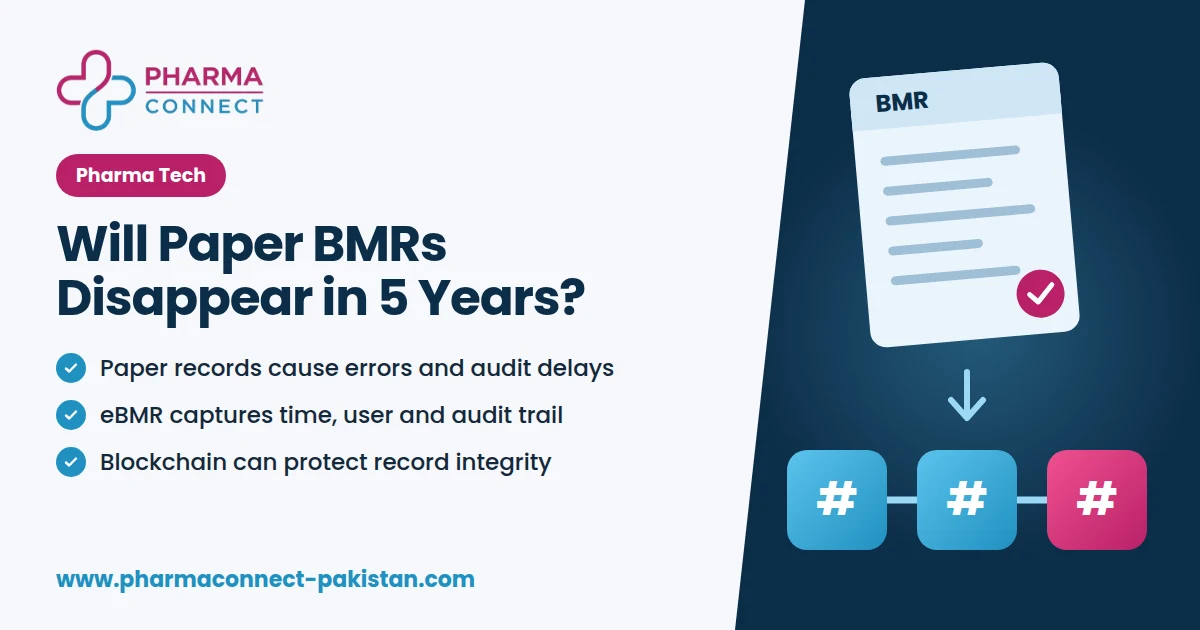
Pharma plants in Pakistan still run on paper batch records. Here is how eBMR and blockchain are changing documentation and data integrity.
If you walk into any pharma factory in Pakistan even today, you will see a big almirah full of log books and Batch Manufacturing Records. Each batch has a thick file, handwritten entries, signatures, dates, corrections with single line. This system is running from last 50 years. But now industry is changing fast. We are talking about electronic batch records and blockchain. So the big question is, will paper BMRs completely disappear in next 5 years?
WHAT IS BMR AND WHY IT IS SO IMPORTANT?
━━━━━━━━━━━━━━━━━━━━━━━━━━━━━━━━━━━━━━━
BMR means Batch Manufacturing Record. It is the complete story of one batch. From raw material weighing to final packing, everything is written in BMR. Which material used, which machine used, what temperature, what time, who did it, who checked it. If BMR is not complete, batch is considered not manufactured. FDA says, If it is not documented, it is not done.
In old time, all BMRs were paper based. Operator writes with blue pen, QA reviews, QA signs. This is called pBMR or paper BMR.
PROBLEMS WITH PAPER BMRS
━━━━━━━━━━━━━━━━━━━━━━━━
Paper looks simple but it creates many problems.
Human error. Writing wrong number, missing signature, wrong calculation. Studies show almost 40 percent of deviations in pharma are due to documentation errors.
No real time visibility. QA manager in office does not know what is happening on shop floor until paper file comes to him next day.
Audit problem. During FDA or DRAP audit, team spends 3-4 days just finding old BMR files from store room. Sometimes page is missing or ink is faded.
Data integrity issue. Paper has no automatic time stamp. A person can write entry later and put old time. This violates ALCOA+ principle which FDA now checks very strictly. ALCOA+ means Attributable, Legible, Contemporaneous, Original, Accurate, Complete, Consistent, Enduring, Available, Traceable.
Due to these reasons, many companies started moving to eBMR.
WHAT IS eBMR?
━━━━━━━━━━━━━
eBMR is Electronic Batch Manufacturing Record. Instead of paper, operator enters data in tablet or computer on the shop floor. System automatically captures time, user ID, and creates audit trail. If operator tries to enter out of limit value, system gives error immediately.
Benefits reported by companies are huge. Sun Pharma after implementing eBMR reported significant reduction in documentation errors and faster batch review. Some reports say batch review time reduced from 20 days to 1 day.
eBMR is not just digital paper. It is connected with other systems like LIMS, ERP, SCADA and MES. So when weighing happens, weight automatically comes from balance. No manual copying.
WHERE DOES BLOCKCHAIN COME?
━━━━━━━━━━━━━━━━━━━━━━━━━━━
Now after eBMR, next level is blockchain. Many people think blockchain is only for Bitcoin, but in pharma it has very serious use.
Blockchain is a chain of blocks where data once written cannot be changed. It is immutable. In pharma, this is game changer for data integrity.
As per research published in Springer Cluster Computing journal in 2025, a new model called BBPSC was introduced. In this model, all batch details are stored in secure decentralized storage like Filecoin, and its hash ID is stored on Ethereum blockchain. Data is signed with EdDSA algorithm so no one can change it. Smart contracts automatically execute the steps.
What does this mean for BMR? It means your batch record becomes tamper-proof. If someone tries to change a reading of 25 degree to 26 degree after 2 months, blockchain hash will change and system will catch it immediately. This is more secure than normal computer database.
Another paper explained that blockchain can store hash of each log book entry. Actual log data stays inside company firewall, only its fingerprint, SHA-256 hash, goes to blockchain. So sensitive data is safe but integrity is proved.
Blockchain also helps in traceability. From raw material supplier to manufacturer to distributor to pharmacy, each step is recorded on same ledger. If there is a recall, company can within seconds find where that batch went. Zuellig Pharma's eZTracker is a live example using blockchain for pharma supply chain.
WILL PAPER BMRS DISAPPEAR IN NEXT 5 YEARS? - THE REAL ANSWER
━━━━━━━━━━━━━━━━━━━━━━━━━━━━━━━━━━━━━━━━━━━━━━━━━━━━━━━━━━━━
Now come to main question. Will paper disappear by 2030? Answer is both yes and no.
For large and medium companies - Yes, paper will almost disappear
REASONS:
1. Regulatory pressure is increasing. FDA 21 CFR Part 11 and EU Annex 11 now strongly expect electronic records. New revision of EU Annex 11 is becoming 4 times longer with strict data integrity rules. Paper cannot meet those rules easily.
2. Market size proves it. Electronic batch record market was 1.1 billion dollars in 2024 and expected to reach 2.7 billion by 2034 with almost 10 percent growth every year. This shows all big companies are investing.
3. Cost benefit is clear. Paper BMR needs printing, storing for 7-10 years, manual review. eBMR reduces review time by 75 percent and deviation due to human error by 50 percent. So ROI is very fast.
4. Pharma 4.0 and AI needs digital data. You cannot run AI or predictive quality if your data is on paper in store room. AI needs structured electronic data.
For small companies in Pakistan, Africa, small herbal manufacturers - No, paper will still exist for 5-7 years more
REASONS:
1. High initial cost of eBMR and MES systems. Server validation, software license, tablets for each room cost lakhs.
2. Lack of IT knowledge and poor internet in manufacturing areas.
3. DRAP still accepts paper BMRs. Unless regulator makes eBMR compulsory, small companies will not shift.
4. Blockchain is still very early stage. It needs integration, skilled people, and legal clarity. Many papers say integration complexity and privacy concerns are still challenges.
So what we will see is a hybrid model in next 5 years.
WHAT SHOULD COMPANIES DO NOW?
━━━━━━━━━━━━━━━━━━━━━━━━━━━━━
If you are a pharma professional reading this blog, do not wait for 5 years. Start with small steps.
• Step 1: Start with electronic logbooks. It is easiest. Replace your cleaning log, temperature log, balance calibration log with eLogbook.
• Step 2: Then move to eBMR for one product. Choose your highest volume product and make its BMR electronic. Train operators.
• Step 3: Then think about blockchain for audit trail. You do not need to put full BMR on blockchain. Just put hash of critical steps like batch release, QP signature, COA approval. This will make you inspection ready.
FINAL CONCLUSION
━━━━━━━━━━━━━━━━
Log book journey started with bound register and blue pen. Then we came to printed BMRs. Now we are at eBMR tablets on shop floor. Next destination is blockchain verified batch records.
In next 5 years, paper BMR will not disappear 100 percent from world, but in regulated markets it will become rare. Like how we still see typewriters in some offices but 99 percent work is on computer.
For pharma, quality is not just making good medicine, it is proving that you made it correctly. And that proof in future will be digital, timestamped, and blockchain secured, not paper filed in almirah.
Paper will not die overnight, but its retirement countdown has started.
REFERENCES
━━━━━━━━━━
1. https://link.springer.com/article/10.1007/s10586-025-05871-3
2. https://japsnp.com/index.php/japsnp/article/view/63