
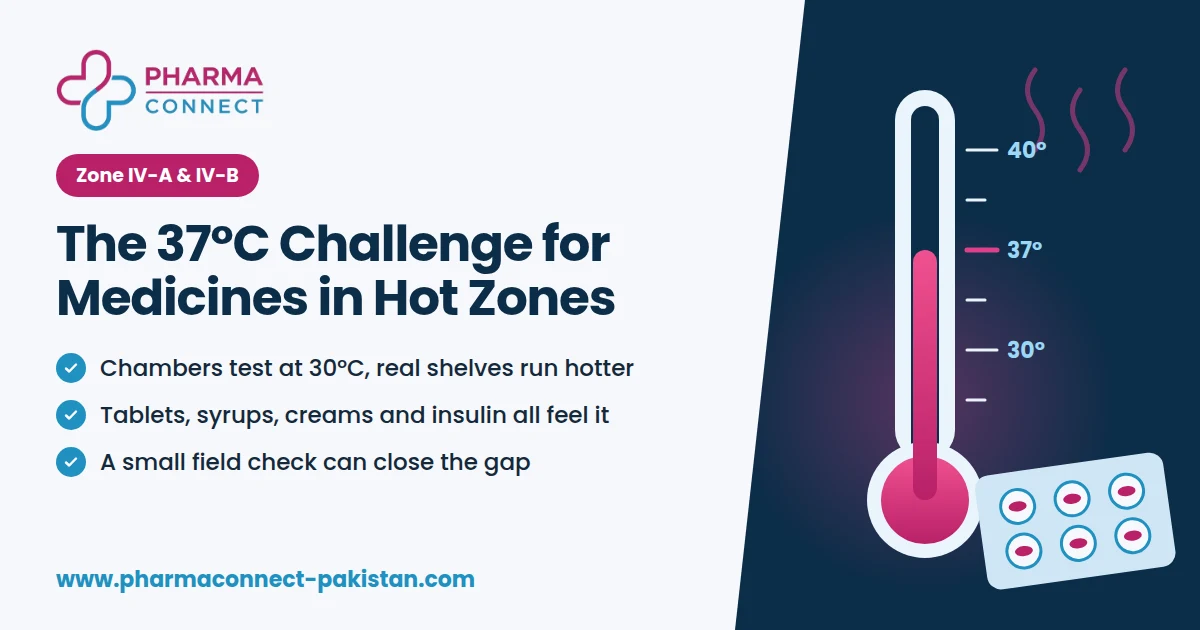
Medicines are tested at 30°C in the chamber, but shops in Karachi, Dhaka and Dubai reach 37°C. Here is where stability data falls short.
INTRODUCTION: THE LINE THAT DOESN'T MAKE SENSE IN JULY
━━━━━━━━━━━━━━━━━━━━━━━━━━━━━━━━━━━━━━━━━━━━━━━━━━━━━━
If you have ever been inside a medical store in Karachi in July, you know exactly what I mean. Outside the temperature is 39°C. Inside, the old AC is set at 32°C but it feels like 34°C. And on almost every medicine box, it says "Store below 30°C".
I first noticed this in Garden, Karachi. I kept thinking, where is this 30°C place in Karachi? It doesn't exist for 6 months. In class we were taught Pakistan is Zone IV-A. That means we test medicines at 30°C and 65% humidity. This not only challenge for Pakistan, it's for All other hot zone countries.
WHAT ARE ZONE IV-A AND IV-B? AND WHICH COUNTRIES ARE IN IT?
━━━━━━━━━━━━━━━━━━━━━━━━━━━━━━━━━━━━━━━━━━━━━━━━━━━━━━━━━━
This is the point many blogs miss, so let me make it clear.
As per ICH Q1A and WHO, the world is divided into:
- Zone III - Hot and Dry: Countries like Iran, Iraq, Sudan, Egypt
- Zone IV-A - Hot and Humid: Countries like Pakistan, Bangladesh, Ethiopia, Northern India, Sri Lanka
- Zone IV-B - Hot and Very Humid: Countries like Brazil, Nigeria, Philippines, Indonesia, Malaysia, Thailand, Gulf countries like Saudi Arabia, UAE, Qatar, and many African countries like Kenya, Ghana
So when we say Zone IV-A, we are not just talking about Karachi and Lahore. We are talking about Dhaka, Colombo, Addis Ababa too.
And when we say Zone IV-B, we are talking about some of our biggest export markets - Dubai, Jeddah, Lagos, Jakarta. These are the countries where Pakistani companies want to export.
The problem is, WHO keeps these two zones separate. Zone IV-A is tested at 30°C / 65% RH and Zone IV-B at 30°C / 75% RH. But many countries have already revised their own guidelines and now use up to 30°C / 75% RH. Pakistan is still following 30°C / 65% RH.
WHAT BOOKS SAY VS WHAT THE CITY SHOWS
━━━━━━━━━━━━━━━━━━━━━━━━━━━━━━━━━━━━━
On paper, Zone IV-A is perfect. It gives us a global standard.
But recent climate research on lower Sindh shows that average maximum temperature in our region is already 34.5°C to 35.2°C and it is increasing every year. This is not from a lab, this is from long-term field measurements.
Then there is the issue of concrete. Studies on Karachi's urban growth show our built-up area was only 97.6 sq km in 2000. By 2020, it became more than 325 sq km. We replaced open land with plazas and warehouses. Concrete stores heat all day and releases it at night. That's why even at 11 pm, a shop in Saddar still feels hot.
And satellite-based monitoring of Karachi found something even more important. Land surface temperature in dense areas was recorded up to 46.73°C, and urban areas were found to be 5.6°C to 13.5°C hotter than nearby open areas.
The same story is happening in Dhaka, Mumbai, Manila, and Lagos. These Zone IV-B cities also cross 37°C daily in summer, but their humidity is even higher than Karachi - often 80-90%.
So the chamber is at 30°C, but the city where the medicine actually lives - whether it is Karachi, Dhaka, Dubai, or Kano in Nigeria - is at 37°C and 75%+ humidity.
THE REAL JOURNEY OF A MEDICINE - MY FLOW
━━━━━━━━━━━━━━━━━━━━━━━━━━━━━━━━━━━━━━━━
Let me explain the journey in a simple flow, because this is where the gap happens:
Manufacturing (20-25°C) -> Stability Chamber (30°C) -> Packing (Alu-Alu / PVC) -> Loading Van (37-42°C) -> Pharmacy Shelf (34-38°C) -> Patient's Home (Kitchen / Bedroom)
Our stability data only covers step 2. But the medicine has to survive step 4, 5 and 6. And step 4 to 6 is the 37°C challenge, whether the medicine is going to Hyderabad or to Dubai.
HOW HEAT AFFECTS EVERY DOSAGE FORM DIFFERENTLY
━━━━━━━━━━━━━━━━━━━━━━━━━━━━━━━━━━━━━━━━━━━━━━
- Tablets: Take amoxicillin-clavulanate, aspirin, omeprazole. In Pakistan and Bangladesh we cut strips - we sell 2 tablets from a strip of 10. Once you cut it, the edge is open. Sea air in Karachi, Chittagong, or Mumbai keeps humidity above 75% for 9 months. That open edge absorbs moisture daily. This is a common issue reported in Zone IV-B countries like Philippines and Nigeria too.
- Capsules: Soft gels like Vitamin E stick together in August. Hard gelatin capsules become brittle. Gelatin starts softening around 37°C. This is why many companies in Brazil and Malaysia (Zone IV-B) have already shifted to HPMC capsules for exports.
- Syrups and Suspensions: A reconstituted amoxicillin syrup says use in 7 days in a cool place. But it is kept in the kitchen where temperature is 38°C in July. This fermentation issue is exactly the same in Nigeria and Indonesia where average kitchen temperature is also 37-39°C.
- Creams and Ointments: it's basically emulsion that made of oil and water. Above 37°C, that emulsion breaks. This is a major reason for cream separation complaints from Gulf countries - Saudi Arabia, UAE - where outside temperature is 45°C and pharmacy transport vans are at 40°C.
- Suppositories: A diclofenac suppository made with cocoa butter melts at 34-36°C. That means it can melt inside its own foil in Lahore in June or in Kano, Nigeria in April before use. This is why WHO guidance for Zone IV-B recommends synthetic bases like Witepsol which melt at 38-39°C.
- Injections and Insulin: Insulin should be at 2-8°C. After opening, we say 28 days below 30°C. But imagine a patient carrying an insulin pen in his pocket for 2 hours in a bus at 38°C in Karachi or in Lagos. Our cold chain data never covers that pocket.
WHAT WE CAN DO BETTER - POSITIVE WAY FORWARD FOR PAKISTAN AND OTHER HOT COUNTRIES
━━━━━━━━━━━━━━━━━━━━━━━━━━━━━━━━━━━━━━━━━━━━━━━━━━━━
1. Adopt 75% RH Standard for Export: Brazil already approved Zone IV-B conditions of 30°C / 75% RH. A medicine that is stable at 30°C / 75% RH will usually be stable at 30°C / 65% RH too. So if Pakistan also tests at 30°C / 75%, our medicines will be better ready for Zone IV-B markets.
2. Smarter Packing for Export: For moisture lovers like Augmentin, Alu-Alu should be default for both local market and for export to Nigeria, Ghana, and Gulf.
3. A Small Field Check: Along with chamber data, keep one small box in a real medical store in Karachi in July and test after 3 months. This field learning will help us for Karachi as well as for Manila and Dubai.
4. Simple Counseling That Works in Every Hot Country: "Store below 30°C" means nothing in an 80-yard house in Karachi or a small flat in Dhaka. If we say "keep in bedroom away from sunlight and kitchen heat, and keep syrups in middle of fridge", patients in Pakistan, India, Bangladesh, Nigeria, and Brazil will all follow.
CONCLUSION
━━━━━━━━━━
The 37°C Challenge is not just a Karachi problem. It is a Zone IV-A and Zone IV-B problem.
A medicine made in Korangi that is stable at 30°C in a chamber but also stable at 37°C in a shop in Saddar, in a pharmacy in Dhaka, in a store in Dubai, and in a market in Lagos - that is a truly global medicine. That is where Pakistan can lead.
REFERENCES
━━━━━━━━━━
1. CGIAR Study on climate trends in Sindh.
2. IIED Study on urban growth in Karachi.
3. Arif Hasan - Karachi built-up expansion data.
4. Satellite monitoring study on Karachi LST up to 46.73°C.
5. WHO TRS 1010 and ICH Q1A concept for Zone IV-A and Zone IV-B (30°C / 65% RH for IV-A and 30°C / 75% RH for IV-B).